Building a Customized Online Examination Platform: A 2026 Guide for Institutions & EdTech Founders
Stop using Google Forms for high-stakes exams. Here is the definitive guide to building a secure, proctored, and scalable customized online examination platform with multi-role access and auto-grading.
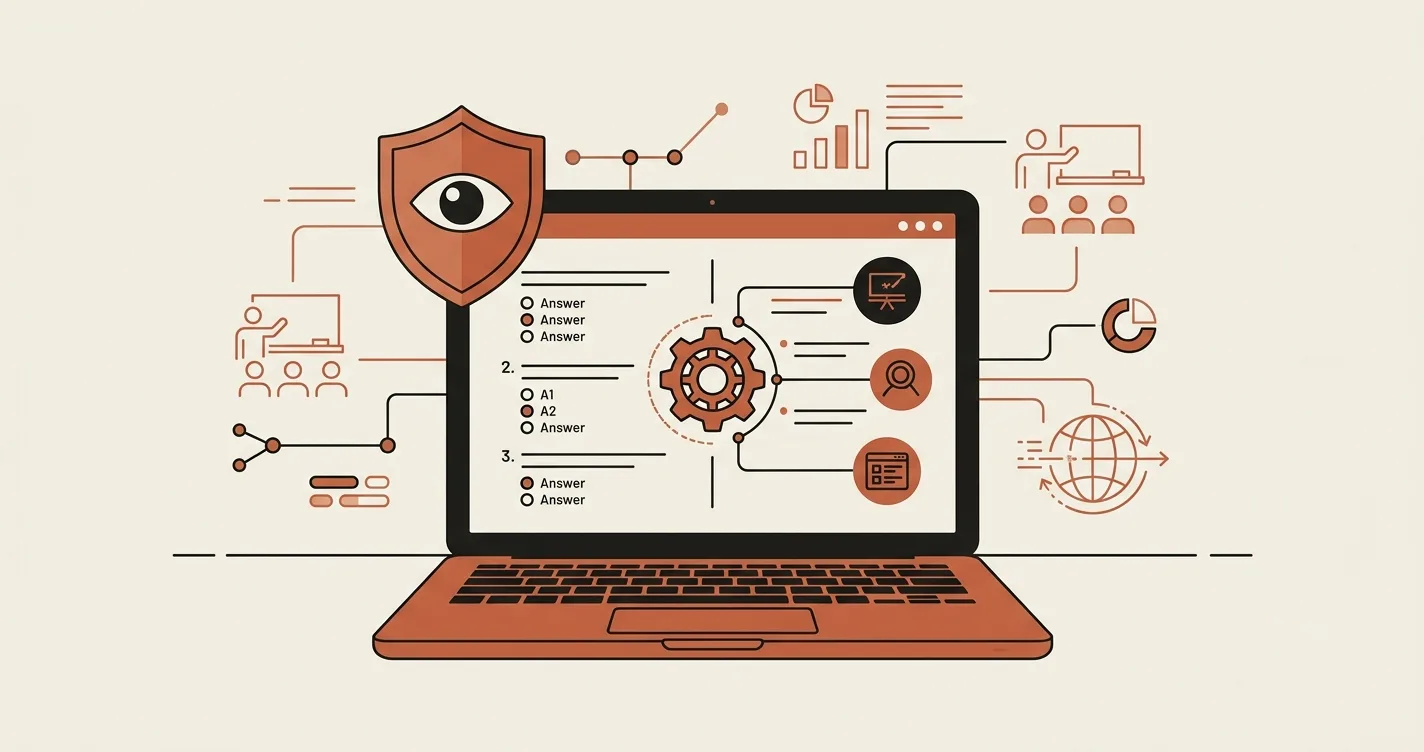
The education technology (EdTech) sector is booming, and the demand for reliable, secure, and customized online examination platforms has never been higher.
In my training sessions and client consultations, I frequently meet school administrators, university registrars, and EdTech founders who are struggling with the same problem: "We are using Google Forms or a third-party quiz app, but it doesn't fit our academic structure, and we can't control cheating."
Using generic tools for high-stakes assessments is a massive risk. They don’t support complex academic hierarchies (cohorts, shifts, semesters), they don’t offer robust proctoring, and they leave student data vulnerable.
If you are an institution looking to scale your assessments or a developer looking to enter the EdTech space, building a customized online examination platform is the smartest investment you can make. Let's break down exactly what goes into building one, and why the architecture matters more than the UI.
Section 1: Why a Custom Platform Beats Generic Off-the-Shelf Tools
Before we talk code, let's talk business logic. Why do you need a custom platform instead of just using Moodle, Google Forms, or a low-code tool?
- Data Ownership & Privacy: When you use a third-party platform, your students' data sits on someone else's servers. With a custom platform, you own every single exam paper, student grade, and data record.
- Complex Academic Workflows: Generic tools cannot handle the nuanced structure of schools, universities, and seminaries. They don't understand that "Batch 2026" has a different start and end date than "Batch 2027," or that "Morning Shift" and "Evening Shift" need separate exam configurations.
- Advanced Proctoring: A generic form cannot detect if a student is opening a new tab, copying the question, or opening their developer tools. A custom platform can log these violations and auto-submit the exam.
- Scale & Performance: When you have 500 students taking an exam simultaneously, generic web apps crash. A custom platform built on modern architecture can handle high concurrency without breaking a sweat.
Section 2: The Core Feature Set of a Professional Exam Platform
If you are planning to build an online examination platform, or if you are hiring a developer to build one for you, these are the non-negotiable features you must demand:
- Multi-Role Portal System: The system must have distinct, cleanly separated dashboards for Admins (who manage the system), Teachers (who create exams and grade papers), and Students (who take exams and view results).
- Public & Registered Exam Flows: You need two distinct tracks. A track for students already enrolled in your institution (login-based), and a Public Exam Flow for walk-in candidates. This public flow should allow candidates to join using a 6-character exam code or a QR code, and it must have an admin approval workflow so the institution can vet external candidates before they start writing.
- Auto-Grading & Question Bank: The system must auto-grade Multiple Choice Questions (MCQ), True/False, and Matching questions. It must also allow teachers to store questions in a reusable question bank for future exams.
- Advanced Proctoring (The Cheating Deterrent): This is absolutely critical. The platform must log events like tab switching, right-clicking, copying/pasting, and opening DevTools. Upon detecting a threshold of violations, the system must auto-submit the exam and flag the attempt for admin review.
- Robust Academic Data Structure: The database needs to support academic hierarchies like Programs (e.g., "Computer Science"), Semesters, Cohorts, and Shifts. This ensures the right students are assigned to the right exams at the right time.
Section 3: The Modern Architecture Behind the Platform
To build a platform that handles all of the above without crashing or slowing down, you need a modern tech stack.
When I built the Web Exam Platform for a client, I chose Next.js 16 (App Router) with TypeScript as the foundation, paired with Prisma ORM and a MySQL database.
Here is why this stack works incredibly well for an exam platform:
- Next.js Server Components allow the major dashboards (Admin, Teacher, Student) to render data directly on the server, which makes the page load instantly and provides incredible SEO benefits for the marketing pages.
- Prisma provides type-safe database queries and seamless migrations, which is essential when you have over 20 tables interacting with each other (Users, Exams, Questions, Cohorts, Results).
- My custom service layer (over 1,700 lines of business logic in
lib/data.ts) ensures that all authorization rules are handled securely on the backend, so users cannot cheat by manipulating the frontend code. - shadcn/ui (a component library) allows for the creation of fast, accessible, and professional-looking interfaces without wasting hours writing custom CSS from scratch.
The result was a platform featuring 71 API routes and over 40+ app pages, capable of handling high-concurrency exam days with in-memory caching and server-side timer synchronization.
Section 4: How to Choose the Right Team for This Build
Building a custom platform like this is a massive undertaking. If you are a founder or an institution head, do not hire a freelancer who claims they can "build a full LMS in 2 weeks."
Instead, apply the framework I outlined in my guide on how to choose a freelance developer by reading case studies. Look for a developer who:
- Demonstrates an understanding of academic hierarchies (not just generic forms).
- Has built secure, role-based systems before.
- Understands the difference between server-side and client-side security (crucial for preventing cheating).
The Bottom Line
The EdTech industry is evolving rapidly, and the institutions that adopt customized, secure, and scalable online examination platforms will be the ones that thrive in the coming years.
Whether you are a software engineer looking for a challenging new project, or an educational institution looking to digitize your assessments, building a robust online exam system is a deeply rewarding and high-value engineering challenge.
If you are planning to build an exam platform or need a technical review of your current architecture, feel free to check out my engineering portfolio or reach out to me directly—I specialize in architecting these types of complex educational systems from the ground up.