How to Choose the Right Freelance Developer by Reading Case Studies (Not Just Resumes)
Resumes can be faked and portfolios can be templated. Here is the exact 4-step framework I use to evaluate a freelancer's skill level by analyzing their real-world case studies.
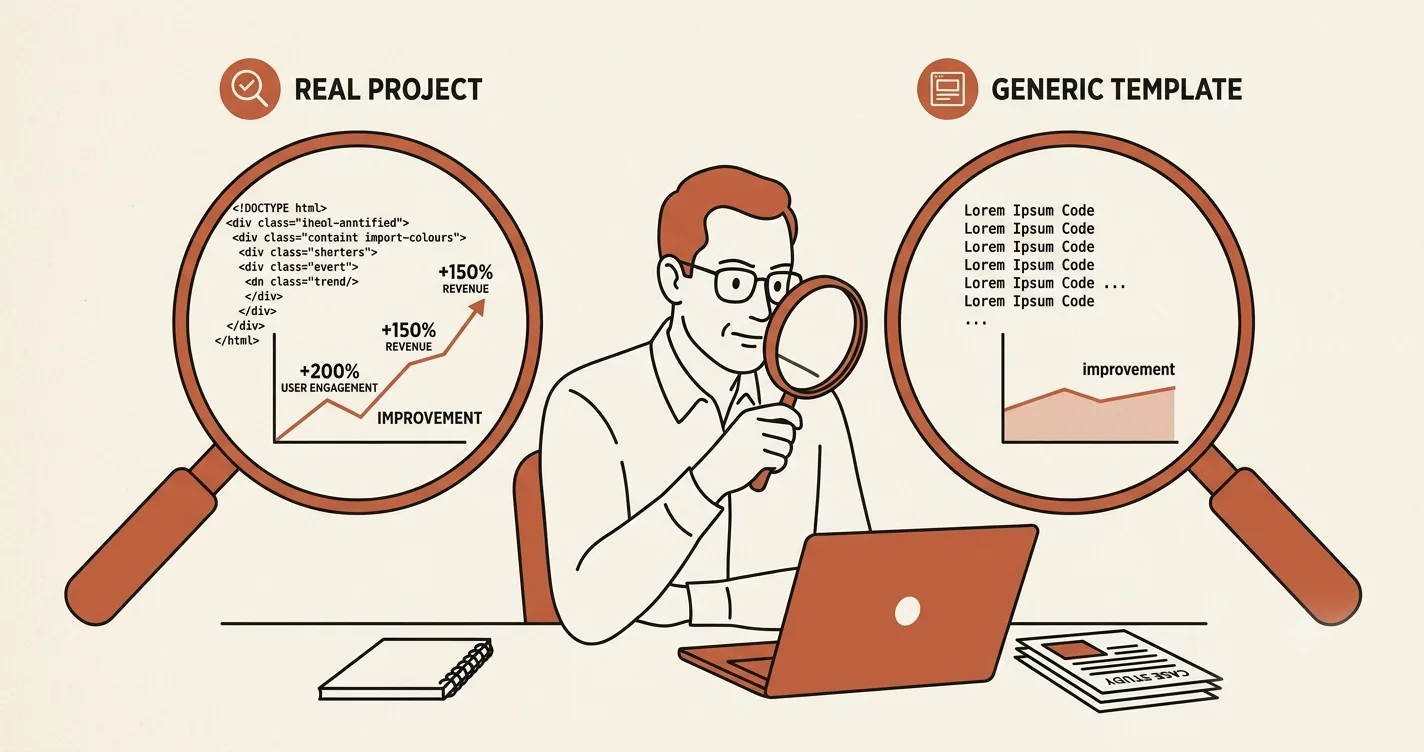
If you are a business owner, founder, or CTO looking to hire a freelance software engineer for your next project, I have some bad news for you: Resumes don't tell the real story.
I have seen countless "Senior Developers" with five years of experience who cannot structure a database query, and junior developers who can architect a full microservice ecosystem.
So, how do you separate the truly skilled engineers from the ones who just talk a good game? The answer lies in Case Studies.
When I apply for high-ticket projects, I don't send a PDF resume. I send links to my detailed engineering case studies—because real developers solve real problems, and the solutions tell you everything you need to know about their skill level. Here is exactly how you should evaluate those case studies to make the right hiring decision.
Step 1: Look for Real Metrics (Not Just Screenshots)
A generic portfolio showcases pretty landing pages. A professional case study showcases hard numbers.
If a developer claims they built an e-commerce platform, demand to know how they improved it. Did they cut checkout abandonment rates? Did they reduce database query times?
For example, when I built the AURETHE jewelry platform, the case study highlights the "7-day marketing attribution reliability"—a direct result of implementing dual-layer Meta Pixel tracking. In the Almuneer LMS, the focus is on the bilingual (English/Urdu) certificate generation and the manual bank transfer workflows specifically tailored to the Pakistani market.
Actionable Takeaway: If a freelancer gives you a generic "I built this website" story without any performance metrics or specific business problems solved, move on to the next candidate.
Step 2: Analyze the Tech Stack & Architecture
A great case study will explain why they chose a specific tech stack. It shows they are an architect, not just a coder.
A beginner writes code. A senior engineer chooses the right tool for the job. When reading a case study, look for hints of architectural discipline:
- Did they handle bilingual requirements?
- Did they build a secure, role-based system?
- Did they deploy on constrained hosting (like shared hosting or low-end VPS) to save the business money?
For instance, the Hikmah Attendance system required a highly specific architectural split: Django for business logic and FastAPI for the facial recognition pipeline. The ability to explain why the API needed to be separated from the frontend is the mark of a true software architect.
Step 3: Check for Real-World Constraints
The best developers are problem solvers. They don't just write code in a vacuum; they work with tight budgets, outdated infrastructure, and real business constraints.
Ask yourself: Does the developer understand the difference between a "nice-to-have" feature and a "business-critical" feature?
When I built Chandi World, a luxury jewelry platform, the client had a very specific constraint: the business operated heavily on bank transfers and manual payments, not standard Stripe/PayPal gateways. A junior developer would have forced a Stripe integration and ignored the client's pain point. A senior developer (like myself) built a complete manual payment verification system with admin approval workflows—solving the business problem, not just enforcing a generic software solution.
Step 4: Test Their Communication Skills
Finally, pay attention to how they write the case study. If the document is riddled with jargon and grammatical errors, they probably don't pay attention to detail in their code, either.
The best freelance developers write detailed, technical, and honest case studies. They tell you what went wrong and how they fixed it. A case study that reads like a sales pitch is usually hiding poor coding habits.
The Final Litmus Test
Once you find a freelancer with great case studies, the absolute best way to verify them is to ask for a live link to the project and spend 15 minutes testing the website yourself.
If the live site loads fast, has no console errors, and works perfectly on mobile, you have found a true professional. And if you are ready to start building a project right now, you can check out my full engineering portfolio or reach out to me directly—I'd be happy to provide detailed architecture plans for your next web application.