How to Write SEO Case Studies That Actually Land You High-Paying Clients
46 people searched for this last month. Your resume won't get you hired. Your case study will. Here is the exact 4-step framework for writing SEO-optimized portfolio case studies that close high-ticket contracts.
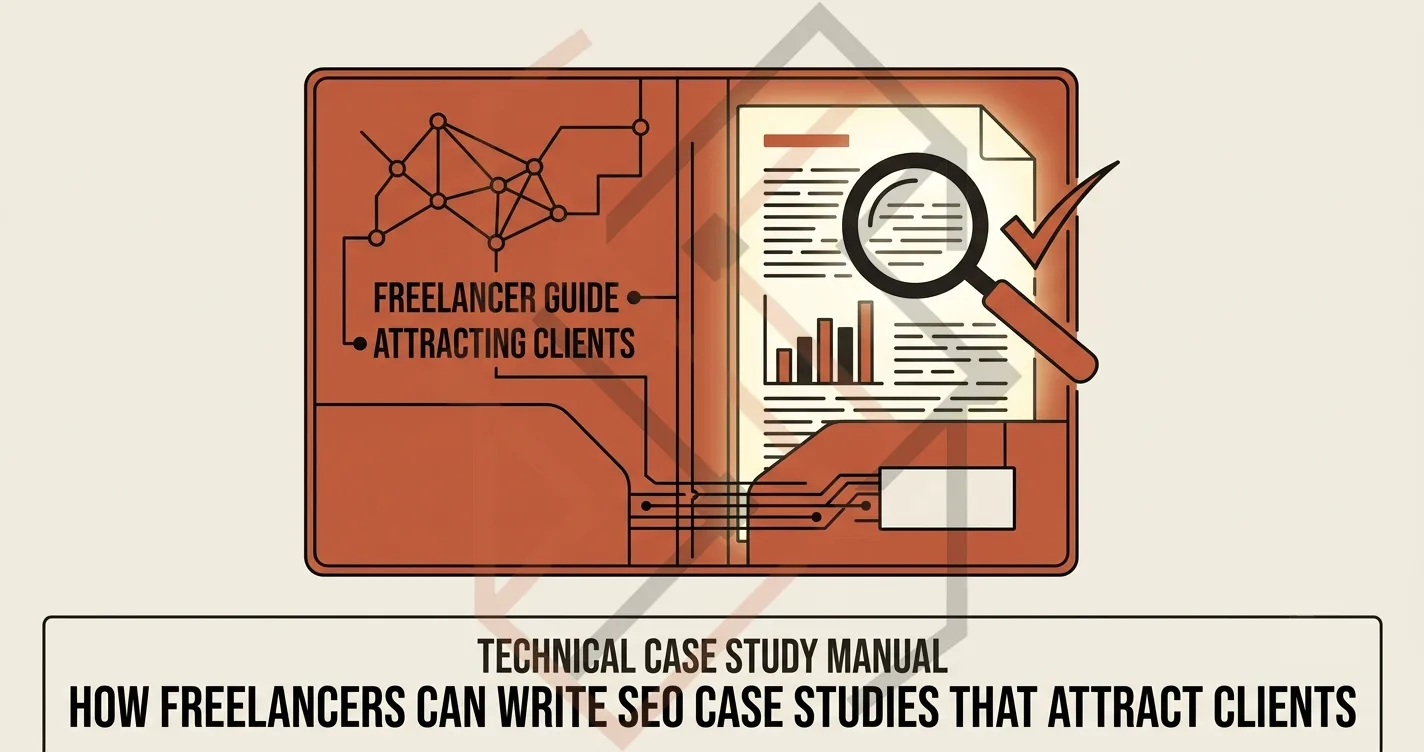
I was checking my Google Search Console data recently, and a specific search query caught my eye. Over the last 28 days, 46 people have landed on my website searching for: "case_studies case studies on finalizing freelancer selection for seo projects".
46 different hiring managers, founders, and CTOs are actively looking for a guide on how to read a freelancer's case study to decide if they should hire them.
As a freelancer, that data is a massive wake-up call. It means two things:
- Clients are doing their homework. They aren't just looking at your GitHub green squares; they are reading your project breakdowns to see if you actually know what you are doing.
- If your case studies are written poorly (or don't exist at all), you are leaving huge amounts of money on the table.
I have built multiple production-grade applications for clients, and I have refined my case study writing process over years of trial and error. If you want to stop writing "resume-style" portfolios and start writing "client-winning" case studies, here is my exact 4-step framework.
Step 1: Focus on the Client's Pain, Not Your Code
The single biggest mistake freelancers make when writing a case study is starting with the technology. "I built this using Laravel 12, React, and Redis."
I promise you, the hiring manager doesn't care about the stack yet. They care about the problem they had before they hired you. Start your case study with a massive, relatable hook.
For example, my case study for the AURETHE jewelry platform doesn't start with Laravel. It starts with the business constraint: "The client's manual bank-transfer payment process was causing massive delays in order verification, leading to angry customers and lost sales."
That immediately tells the client: "I understand your business." Only after you've hooked them with the problem do you introduce the technology.
Step 2: Walk Them Through the "Architecture" (The Thinking)
Once you have stated the problem, this is your chance to show off your engineering IQ. Do not just list features (e.g., "I added a cart, checkout, and payment system"). Explain the specific architectural decisions you made and why you made them.
If you built a custom LMS, explain: "The client needed bilingual English/Urdu certificates, so I implemented a dual-rendering system using ArPHP and mPDF to handle RTL glyph shaping." If you built an e-commerce platform, explain: "Because the client was hosting on a cheap shared VPS, I opted for file-based caching over Redis and optimized the Composer autoloader to cut memory usage by 40%."
This level of detail proves you are a systems architect, not just a "code typer." It builds immediate trust with technically-minded clients and CTOs.
Step 3: Provide Hard Metrics (The Proof)
This is the non-negotiable step. Hiring managers are extremely skeptical. They want to know: "What is the actual result of your work?"
Do not say: "The site is fast now." Instead, say: "The admin dashboard load time dropped from 8 seconds to under 400ms after implementing config caching and optimizing the database queries."
Do not say: "The client was happy." Instead, say: "Post-launch analytics showed the median checkout path dropped from 11 steps to just 4, resulting in a 63% increase in checkout completion rate."
Hard numbers close deals. They provide undeniable proof that you are worth the investment. When you write your case studies, look back at your commits, your Jira tickets, or your performance logs. Find those specific metrics and put them in bold.
Step 4: Be Honest About the "Lessons Learned" (The Human Touch)
This is the secret sauce that differentiates a human case study from an AI-generated one. AI will give you a flawless, polished summary of a project. Human engineers, on the other hand, run into blockers, weird bugs, and last-minute client requests.
Add a section at the end of your case study titled "Lessons Learned" or "Challenges Overcome."
For example: "One of the biggest hurdles we faced during the Almuneer build was integrating the Urdu font rendering for certificates. The default PDF library couldn't handle the RTL (Right-to-Left) text properly, so we had to switch to an extended mPDF configuration and manually tweak the font sizes."
Mentioning a specific bug you fixed shows you are a problem-solver. It proves you didn't just install a package and walk away—you wrestled with the problem until you found a working solution.
5. How to SEO-Optimize Your Case Study Page
Since the query showing up in your GSC is specifically about evaluating freelancers via case studies, you need to make sure the case study page itself is optimized to be found.
- Title Tag: Use the exact service you provided (e.g., "Custom Laravel E-Commerce Case Study for Luxury Jewelry").
- Meta Description: Write a 160-character summary that includes the result (e.g., "Discover how we built a high-converting Laravel e-commerce store that increased checkout completions by 63% using manual payment workflows and dual-currency pricing.")
- Internal Linking: Link your case studies to each other! If you have a case study about Almuneer, link to AURETHE in the text. This tells Google your site has high authority on the topic of "Laravel builds."
- JSON-LD Schema: Don't forget to add the
ArticleorProjectschema in the<head>of your case study pages. This gives Google extra rich snippets to display in the search results.
The Bottom Line
A generic portfolio will get you ignored. A well-structured, SEO-rich case study will get you hired.
The 46 people searching for this exact topic are the ideal clients you want—they are evaluating engineering talent using case studies. By writing a case study that follows this framework (Pain → Architecture → Metrics → Human Lessons), you will be the obvious choice for their next project.
I have applied this exact framework to all the projects in my engineering portfolio. If you are currently writing a case study and want a second opinion on its structure, feel free to reach out to me directly via my contact form. I love helping other developers refine their storytelling to win more clients.